From Huskies to Aussies to white Boxers, here is what actually causes blue eyes in dogs — and when to pay attention.
If you have ever locked eyes with a Siberian Husky, you know the feeling. That brilliant, almost icy blue stare is unforgettable. But blue eyes are not just for Huskies. Australian Shepherds, Border Collies, Great Danes, white Boxers, and even the occasional Corgi can sport them too.
So what is going on? Why are some dogs born with brown eyes — the standard for most breeds — while others gaze back at you with eyes the color of a winter sky?
The answer is simpler than you might think. It is all about pigment, a few specific genes, and one surprising optical trick.
The Short Answer: It Is Not Blue Pigment
Here is the first thing to understand: no dog has blue pigment in its eyes.
Brown eyes look brown because they contain a lot of melanin — the same pigment that colors skin and hair. Blue eyes, on the other hand, have very little melanin in the front layer of the iris. Without much pigment to absorb light, the light scatters back out. And just like the sky, scattered light looks blue to our eyes.
So a blue-eyed dog does not have blue paint in its eyes. It has less pigment, and nature does the rest.
The Three Ways Dogs Get Blue Eyes
Almost every blue-eyed dog you will ever meet falls into one of three categories. Each has its own genetic cause, its own look, and its own story.
1. The Husky Type (ALX4 Gene)
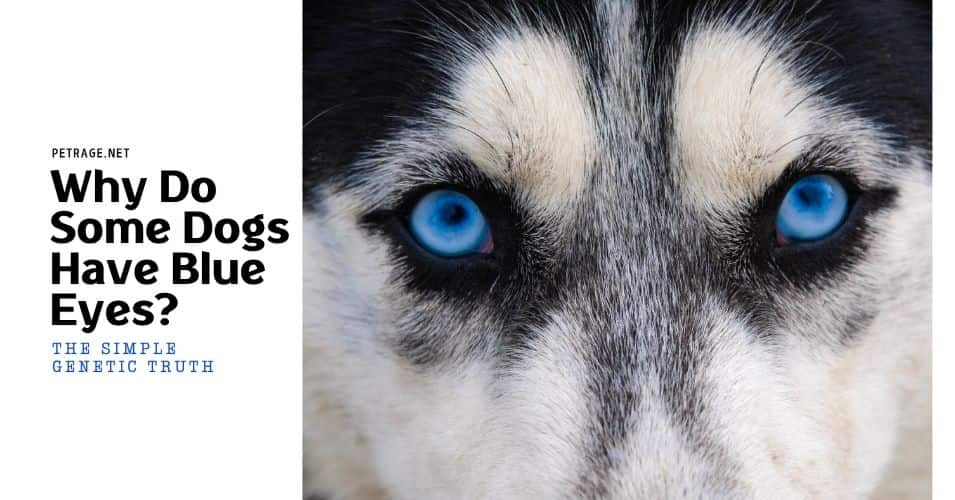
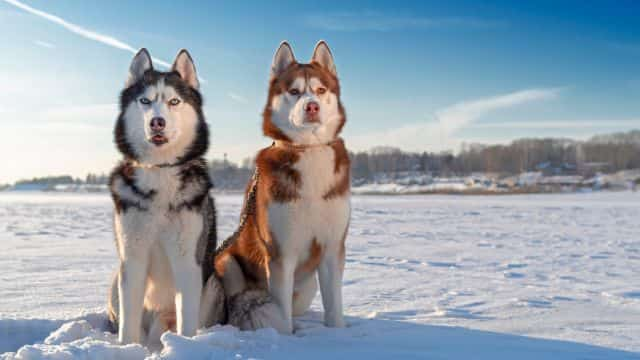
Siberian Huskies are the rock stars of blue-eyed dogs — and for good reason. Their blue eyes are solid, bright, and completely independent of their coat color. A black-and-white Husky can have blue eyes. So can a red Husky, a gray Husky, or an all-white Husky.
What causes it? A specific genetic duplication on canine chromosome 18 near a gene called ALX4. Think of it as a “blue eye switch” that some Arctic breeds inherited from their ancient ancestors.
Is it healthy? Yes, completely. This genetic pathway has no link to deafness, blindness, or any other health problem.
Which breeds have it? Primarily Siberian Huskies, plus related Arctic breeds like the Alaskan Klee Kai.
Fun fact: Unlike most breeds where blue eyes are linked to coat pattern, a Husky can look completely different from one litter to the next — and still have those bright blue eyes.
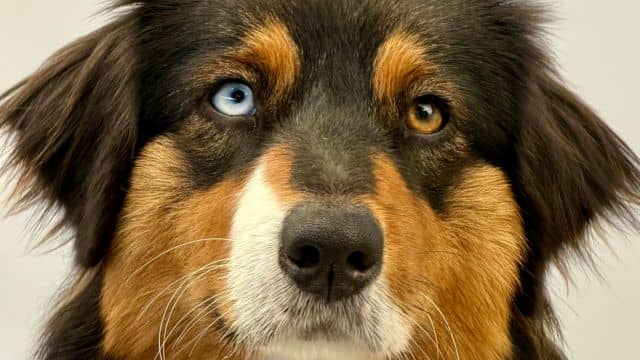
Moonshine the Aussie by Betsy C
2. The Merle Type (Pattern-Related)
If you have seen an Australian Shepherd with one brown eye and one marbled blue eye, you have seen the merle effect. This type of blue eye is patchy, flecked, or marbled — not solid like a Husky’s.
What causes it? A gene called merle (M) that randomly dilutes patches of color in both the coat and the eyes. Wherever the dilution hits, you might get a lighter patch of fur or a splash of blue in the iris.
Is it healthy? In a single copy, usually yes. But if two merle dogs are bred together, about 25% of their puppies will inherit two copies of the merle gene. These “double merles” have a high risk of deafness, blindness, or both.
Which breeds have it? Australian Shepherds, Border Collies, Great Danes (harlequin variety), Cardigan Welsh Corgis, Dachshunds (dapple), and Catahoula Leopard Dogs.
Important: A dog with visible merle coat pattern can have blue eyes, but a dog can also carry a “cryptic merle” gene — meaning the merle is hidden in a solid coat. This is why responsible breeders test for the merle gene even in dogs that do not look merle.
My Catahoula by Lisa
3. The Piebald / White Marking Type (Including White Boxers)
Some dogs have blue eyes simply because white markings cover the area around their eyes. When pigment cannot reach the eye during development, the eye stays blue.
What causes it? Variants in the MITF gene or other white-spotting genes control how much white a dog has on its coat. If the white markings cover the face, the eyes may not receive the signal to produce melanin.
Is it healthy? Mostly, yes. However, dogs with extreme white coats have higher rates of congenital deafness. The same lack of pigment cells that affects the eyes can also affect the inner ear. The blue eyes themselves are not the problem — they are just a clue.
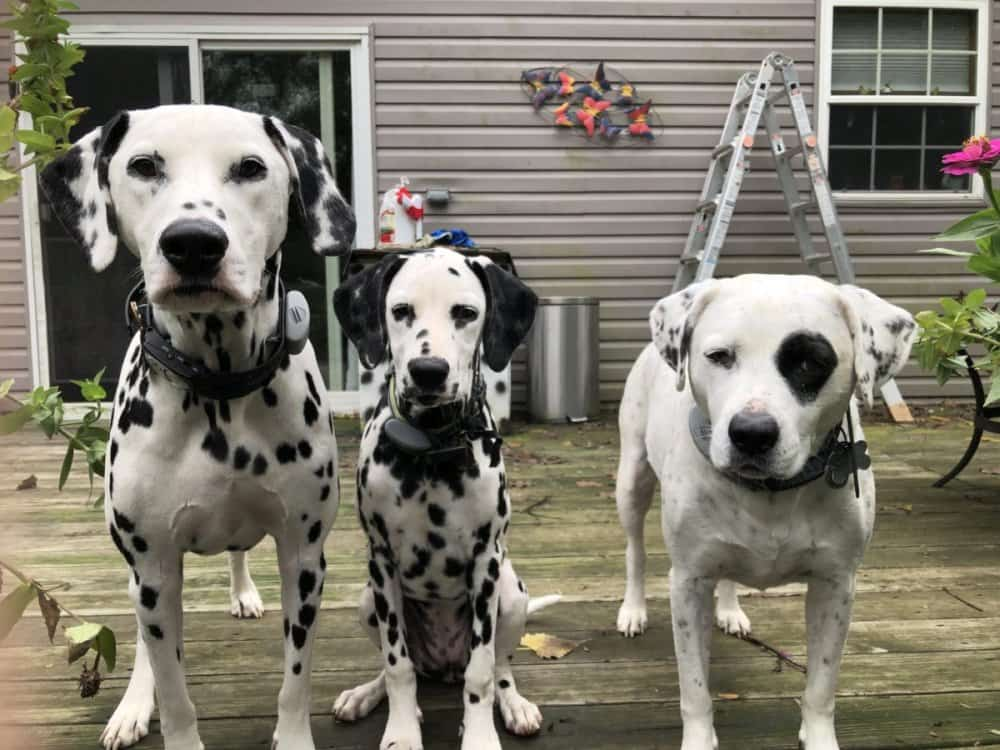
Which breeds have it? Dalmatians, Bull Terriers, and certain white-patterned breeds.
I love my white Boxer by MoMo_Eywa
A Special Case: White Boxers
White Boxers can have blue eyes, but they are a non-standard variety specifically because of the health risks associated with the white pattern.
Here is what you need to know about white Boxers:
Aspect
What It Means
Eye color
Can have blue eyes, one blue/one brown, or dark eyes
Are they albinos?
No. True albinos have pink eyes and no pigment anywhere. White Boxers have pigment in their eyes, nose, and often skin spots.
Deafness risk
About 8% of white Boxers are deaf in both ears; another 12–15% are deaf in one ear. This is due to lack of pigment cells in the inner ear, not the eye color itself.
Blindness risk
The old belief that white Boxers are prone to blindness is a myth.
Breeding ethics
Responsible breeders do not breed white Boxers and often require neutering contracts. The white Boxer is non-standard for a reason — not because of looks, but because of the real health risks.
The takeaway: A white Boxer with blue eyes can still be a wonderful, trainable pet. Deaf dogs learn hand signals beautifully. But the blue eyes are a clue that the dog carries a pigment-related health risk, and responsible breeding practices avoid passing those traits on.
What About Heterochromia (Two Different Colored Eyes)?
Heterochromia — one blue eye and one brown eye — is not a separate cause. It simply happens when the genetic effect lands on one eye but not the other. This can occur through any of the three pathways above.
Huskies get heterochromia from the ALX4 pathway. Aussies get it from merle. White Boxers can get it from the piebald pattern. And occasionally, a dog with no known genetic cause will simply be born with two different colored eyes — a rare but harmless random event.
Can Any Breed Have Blue Eyes by Random Chance?
This is a great question, and the answer is: in theory, yes. In reality, almost never.
Any dog could, in theory, experience a spontaneous genetic mutation that turns its eyes blue. But true “random chance” blue eyes are so extraordinarily rare that most experts have never seen a confirmed case.
Here is what is actually happening when you see a blue-eyed dog from a breed that “shouldn’t” have them:
What You See
What Is Probably Happening
Blue-eyed Labrador
Likely a cryptic merle or a recent cross with a Husky/Aussie
Blue-eyed Golden Retriever
Almost certainly not purebred, or has a health condition
Blue-eyed Poodle
May carry hidden merle (merle is not standard in Poodles but can be introduced)
Blue-eyed white Boxer
The white pattern (non-standard but known in the breed)
The bottom line: If a breed standard says blue eyes are not allowed, and you see a blue-eyed dog, do not assume it is a rare miracle. It is almost always genetics — just not the kind the breeder intended.
When Blue Eyes Can Be a Health Warning (And When They Are Not)
Let us make this very clear:
Blue eyes themselves are not a health problem. A blue-eyed dog sees just fine.
However, blue eyes can sometimes be a clue that a dog carries a gene that does come with risks.
Genetic Cause
Health Risk?
ALX4 (Husky type)
None
Merle (single copy)
None for the dog itself, but risky if bred to another merle
Double Merle (two copies)
High risk of deafness and blindness
Extreme piebald / white pattern
Higher risk of deafness if white covers the ears (e.g., white Boxers, Dalmatians)
The only way to know for sure if a blue-eyed dog carries risky genetics is through DNA testing. But for a pet owner, here is a simple rule: if your blue-eyed dog is healthy and happy, there is nothing to worry about. Just be aware that the same genes that gave those beautiful eyes might also affect hearing.
Common Myths About Blue-Eyed Dogs
Let us bust a few myths while we are here.
Myth
Truth
“Blue-eyed dogs are part wolf”
False. Many purebred dogs have blue eyes through normal genetics.
“Blue-eyed dogs see differently”
False. Eye color does not affect vision quality.
“Blue-eyed dogs are always deaf”
False. Only certain genetic combinations (double merle, extreme piebald) carry that risk.
“All blue eyes come from merle”
False. Huskies and white Boxers prove otherwise.
“White Boxers are blind”
False. That is an old myth. Deafness is the real concern.
In most other breeds — Labradors, Goldens, Poodles, Beagles, French Bulldogs — blue eyes are not standard and may indicate mixed breeding, a hidden merle gene, or (in the case of white Boxers) a known non-standard pattern.
Conclusion: The Beauty of Genetic Diversity
Blue eyes in dogs are not magic. They are not a sign of wolf blood or poor health. They are simply the result of a few specific genetic switches that reduce pigment in the iris — sometimes on purpose (thanks, evolution), sometimes by accident, and sometimes as a side effect of a beautiful coat pattern.
Whether you love the solid blue stare of a Husky, the marbled gaze of an Aussie, the one-blue-one-brown look of a rescue mutt, or the striking blue eyes of a white Boxer, one thing is certain: blue-eyed dogs are unforgettable.
And now, you know exactly why.
FAQs (Quick Answers)
Do blue-eyed dogs have vision problems?
No. Eye color does not affect vision.
Are blue-eyed dogs rare?
It depends on the breed. In Huskies, they are common. In Labradors, they are extremely rare.
Can a puppy’s blue eyes change color?
Yes. Many puppies are born with blue-gray eyes that turn brown by 8–12 weeks. If the eyes are still blue by 4 months, they will likely stay that way.
Is it safe to breed two blue-eyed dogs?
It depends on the cause. Breeding two merle dogs (even if both have blue eyes from merle) is dangerous. Breeding two ALX4-type Huskies is fine. Breeding two white Boxers is irresponsible due to deafness risks. Always test first.
Are white Boxers with blue eyes healthy?
They can be, but they have a higher risk of deafness. About 8% are deaf in both ears. The blue eyes themselves are harmless, but they are a clue to the white pattern that carries health risks.
Do humans with blue eyes have the same genetics as blue-eyed dogs?
Not exactly. Human blue eyes come from a single, recent mutation in the HERC2 gene shared by all blue-eyed people. Dogs have multiple independent genetic pathways (ALX4, merle, piebald), making their blue-eye genetics more diverse.
Can all white dogs have blue eyes?
No. It depends on why the dog is white. White dogs with piebald/white spotting (like white Boxers and Dalmatians) can have blue eyes. White dogs with recessive red/ee genetics (like Samoyeds and white German Shepherds) cannot — their eyes stay brown or amber.