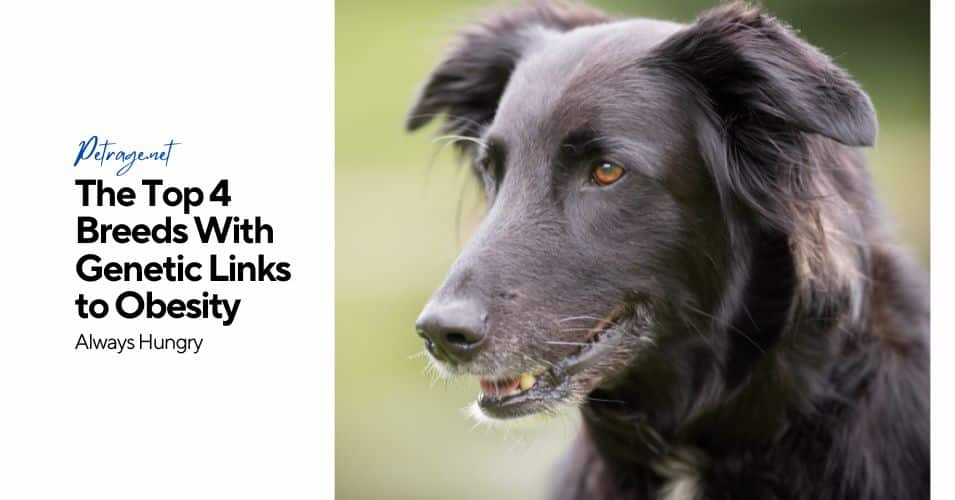
Does your dog act like they haven’t eaten in days, even though you just filled their bowl? If you own a Labrador, Beagle, or Golden Retriever, you might have chalked it up to “just being a dog.” But what if we told you that their bottomless pit of a stomach isn’t a personality flaw—it’s actually written into their DNA? Scientists have uncovered a fascinating genetic secret behind why some dog breeds pack on the pounds so easily. We’re diving into the four specific breeds that have peer-reviewed, replicated genetic evidence showing that their genes are literally hardwired for weight gain.

1. Labrador Retriever – The Most Studied Breed
The Genetic Problem: Labs can carry two different obesity-related genetic variants. The first is a POMC gene deletion that scrambles their brain’s “fullness” signal. The second is a DENND1B variant linked to higher body fat.
What This Means for Your Dog: After eating, a normal dog’s brain gets a signal saying “stop.” In Labs with the POMC mutation, that signal never fully arrives. They feel genuinely, persistently hungry. On top of that, each copy of the DENND1B variant is linked to roughly 8% more body fat.
How Common Is It? About 1 in 4 pet Labs carries the POMC mutation. Surprisingly, 45% of assistance dog breeding stock carry it—breeders may have unintentionally selected for food motivation because it makes dogs easier to train.
The Bottom Line: If your Lab acts starving all the time, it might not be begging. It might be biology.
2. Flat-Coated Retriever – The Close Relative
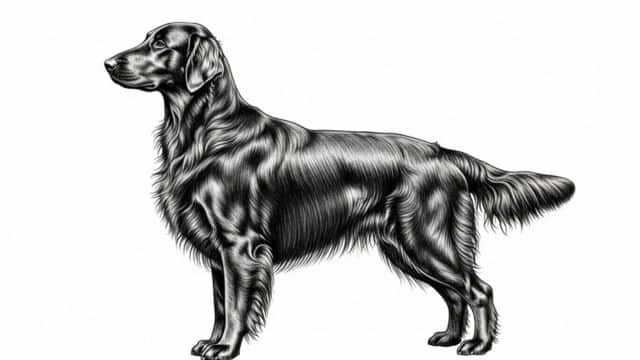
The Genetic Problem: Flat-Coats share the exact same POMC 14-bp deletion as Labradors. They inherited it from their common ancestor, the now-extinct St. John’s Water Dog.
What This Means for Your Dog: Same as Labs—disrupted fullness signals, increased food motivation, and lower calorie burn. But here’s the kicker: it’s actually more common in Flat-Coats than in Labs.
How Common Is It? Roughly 60-66% of Flat-Coats carry the mutation. About 39% carry two copies, meaning they got the hunger gene from both parents.
The Bottom Line: This breed is less famous than the Labrador, but genetically, they may be even more prone to obesity.

3. Golden Retriever – The MC4R Connection
The Genetic Problem: Goldens do not carry the POMC deletion found in Labs and Flat-Coats. Instead, researchers have identified MC4R gene polymorphisms associated with higher body condition scores.
What This Means for Your Dog: The MC4R gene encodes the melanocortin 4 receptor—a critical player in the brain’s appetite regulation pathway. Mutations in this gene are the most common known genetic cause of obesity in humans. Goldens show similar associations.
How Common Is It? Prevalence data is still emerging, but the genetic signal is strong enough that Goldens consistently appear in obesity research studies.
The Bottom Line: Your Golden’s love of food may have a genetic basis—just a different one from the Lab’s.

4. Beagle – Small Breed, Big Genetic Signal
The Genetic Problem: Beagles were included in the same MC4R study as Goldens. Researchers found significant associations between two MC4R variants (c.-435T>C and c.637G>T) and higher body condition scores.
What This Means for Your Dog: Beagles are notoriously food-motivated and prone to weight gain—traits that have made them common subjects in obesity research. The MC4R findings provide a genetic basis for what many Beagle owners already know: these small hounds will eat endlessly if given the chance.
How Common Is It: Prevalence data is still being established, but the genetic association is statistically significant in published research.
The Bottom Line: A Beagle’s endless foraging isn’t just stubbornness—it may be coded into their DNA.
Quick Comparison: The Genetic Four
| Breed | Primary Gene | Effect |
|---|---|---|
| Labrador Retriever | POMC + DENND1B | No fullness signal + 8% more body fat |
| Flat-Coated Retriever | POMC | No fullness signal (more common than in Labs) |
| Golden Retriever | MC4R | Higher body condition scores |
| Beagle | MC4R | Higher body condition scores |
Honorable Mention: 4 Breeds Prone to Obesity (No Identified Gene Yet)
These breeds consistently appear in obesity prevalence studies. Researchers have not yet pinned down specific genetic mutations, but the observational evidence is strong.

5. Pug
Why They Struggle: Pugs are brachycephalic (flat-faced), which makes exercise harder. They overheat quickly and tire easily, leading to lower daily activity levels. Combine that with an enthusiastic appetite, and weight gain becomes almost inevitable without strict management.
What Owners Can Do: Short, frequent walks in cool weather. Never free-feed. Use low-calorie treats like green beans or cucumber slices.

6. Cavalier King Charles Spaniel
Why They Struggle: These small spaniels seem to lack natural satiety cues. They will eat whatever is in front of them and then act hungry again immediately. Because they are small, even a few extra pounds represents a significant percentage of their body weight.
What Owners Can Do: Measure every meal with a kitchen scale. Avoid table scraps entirely. Regular weigh-ins at home.
7. Rottweiler
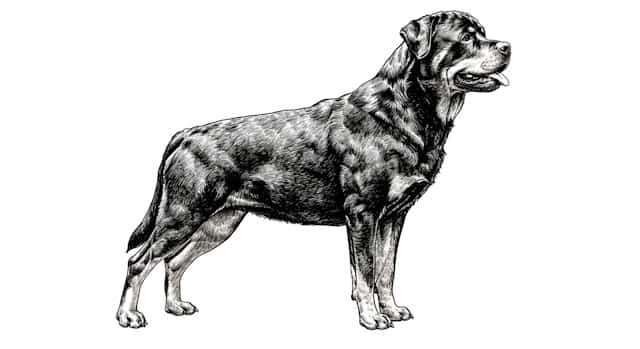
Why They Struggle: Rottweilers are a large breed with moderate activity needs, but studies show they have elevated obesity risk compared to other large breeds. Their calm, patient demeanor can mask gradual weight gain until it becomes severe.
What Owners Can Do: Daily exercise is non-negotiable. Joint-friendly activities like swimming are excellent. Watch portion sizes carefully—large breeds need surprisingly few calories relative to their size.

8. English Springer Spaniel
Why They Struggle: Springer Spaniels were bred for long days of hunting, which means they have high food motivation to fuel that work. In a modern home with a bowl of kibble and no fieldwork, that same drive leads to overeating. The Royal Veterinary College has identified them as a high-risk breed in multiple studies.
What Owners Can Do: Provide mental stimulation (nose work, puzzle toys) to satisfy foraging instincts. Split daily food into multiple small meals. Never leave food unattended.
What These Genetics Mean for You (Actionable Takeaways)
First, don’t panic.
Genetics create predisposition, not destiny. A key finding from the DENND1B study: high-risk dogs kept on strict diets maintained healthy weights, while low-risk dogs stayed lean regardless of feeding practices.
Your management matters more than your dog’s DNA.
Second, use these strategies:
1. Measure every meal. Use a kitchen scale or standard measuring cup. “Eyeballing” portions is the #1 cause of gradual weight gain.
2. Rethink treats. Swap processed dog treats for green beans, carrots, cucumber slices, frozen peas, or even plain ice cubes. Most dogs love them just as much.
3. Use slow feeders. A puzzle bowl or snuffle mat turns a 30-second meal into 10 minutes of mental work. This helps your dog feel fuller longer.
4. Exercise daily. For high-risk breeds, a 20-minute walk isn’t enough. Aim for at least 45-60 minutes of activity, split into two sessions.
5. Learn the hands-on test. Run your hands along your dog’s ribs. You should feel each rib easily, like the back of your knuckles. If you have to press, your dog is overweight.

Third, know when to call the vet.
Talk to your veterinarian if:
- Your dog is gaining weight despite portion control
- You can’t feel their ribs at all
- They have suddenly gained weight without a change in diet
Your vet can rule out medical causes (like hypothyroidism) and help create a safe weight loss plan.
Frequently Asked Questions About Overweight Dogs
How do I know if my dog is overweight?
Use the hands-on test. Run your palms along your dog’s ribcage. You should feel each rib easily without pressing hard—like the back of your hand. If you have to push through fat to feel ribs, your dog is overweight. Also look for a visible waist behind the ribs when viewed from above, and a tummy tuck when viewed from the side.
Can a dog lose weight if they have a genetic condition?
Yes. Genetics make weight gain easier and hunger stronger, but they do not make weight loss impossible. The DENND1B study of Labradors found that high-risk dogs kept on strict, measured diets maintained healthy weights just as well as low-risk dogs. The key is consistency: measured meals, limited treats, and daily exercise.
Why is my dog always hungry?
For some breeds (Labradors, Flat-Coated Retrievers), the answer may be genetic. The POMC mutation disrupts the production of peptides that signal fullness to the brain. These dogs feel genuinely hungrier than other dogs. For other breeds, constant hunger can also be caused by medical issues (like diabetes or Cushing’s disease), poor-quality food (low protein, high filler), or simply habit. A vet visit can help rule out medical causes.
What is the fastest way for a dog to lose weight?
Slow and steady wins the race. Safe weight loss for dogs is 1-3% of body weight per week. Rapid weight loss can cause health problems. The most effective approach: switch to a vet-approved weight management food, measure every meal with a kitchen scale, replace high-calorie treats with vegetables, and increase daily exercise gradually. A veterinary nutrition plan is always safer than a crash diet.
Do mixed-breed dogs have the same obesity genetics?
Possibly, yes. If a mixed-breed dog has a parent from one of the high-risk breeds (Labrador, Flat-Coat, Golden, Beagle), they may inherit the same genetic variants. However, most obesity research has focused on purebred dogs. For mixed-breeds, the same rules apply: measure meals, limit treats, and check body condition regularly.
How much should I feed my dog each day?
There is no one-size-fits-all answer. Start with the feeding guide on your dog’s food bag, then adjust based on your dog’s body condition. Most bag recommendations are too high for sedentary dogs. A good rule: feed the amount that keeps your dog at a healthy weight, not the amount the bag says. Your vet can give you a calorie target based on your dog’s ideal weight, age, and activity level.
Are some dog breeds naturally lazy?
No. No breed is “naturally lazy” in a genetic sense. However, some breeds (like Pugs and Bulldogs) have physical limitations that make exercise harder. Others (like Rottweilers) have calm temperaments that owners mistake for low exercise needs. Every dog needs daily activity—just the type and duration varies by breed.
Can neutering or spaying cause weight gain?
It can increase risk. Spaying and neutering reduce metabolic rate slightly and can increase appetite in some dogs. However, this is manageable with diet adjustments. The benefits of spay/neuter (reduced cancer risk, population control) outweigh the risks for most dogs. Simply reduce portion sizes by 10-20% after surgery and monitor body condition closely.
Final Thoughts
Some dogs aren’t greedy. They’re genetically hungry.
The four breeds covered here—Labradors, Flat-Coated Retrievers, Goldens, and Beagles—have proven genetic links to obesity. Several others show high rates without confirmed causes yet.
But here’s the truth that matters most: Genetics are not destiny.
Owners of these breeds simply need to be more intentional. Measure meals. Rethink treats. Exercise daily. Check body condition regularly. With consistency, even the hungriest Labrador can live a long, lean, healthy life.
Now go take your dog for a walk.
Disclaimer: This article is for informational purposes only and does not constitute veterinary advice. Always consult a licensed veterinarian for diagnosis and treatment of your dog’s specific medical condition.