You bring home a fluffy black puppy. Six months later, your neighbor asks, “Did you get a new dog?”
No—you just adopted a canine chameleon.
Some dogs are born looking one way and mature looking completely different. Not just a little shading difference—we’re talking black to silver, white to spotted, blue eyes to brown, or a total surprise makeover by their first birthday.
Here are the dog breeds that pull off nature’s most delightful magic tricks.
The Faders: Born Dark, Turn Light
These puppies arrive looking like little bears—dark brown or black. Then, over months or years, their color drains away like fading denim, leaving behind silver, grey, or sandy coats.
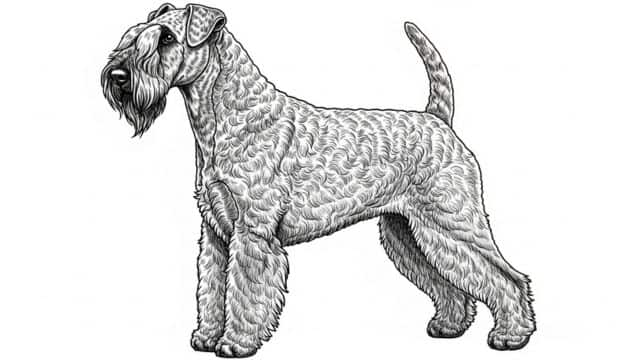
Kerry Blue Terrier
Despite the name, Kerry Blues are not born blue. They enter the world as solid black puppies. Over 18 to 24 months, their coat slowly transforms into the stunning slate blue or grey that gives the breed its name. It’s like watching a photo develop in slow motion.
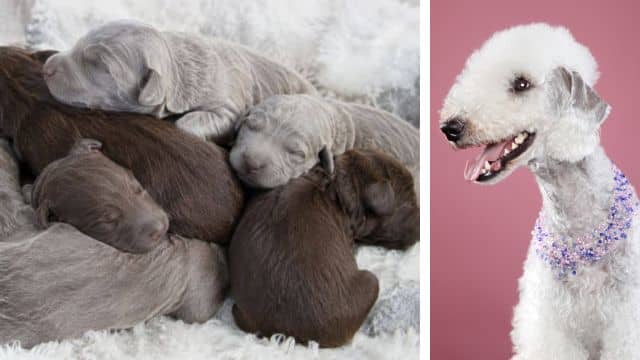
Bedlington Terrier
These lamb-looking dogs pull the same trick. Born dark brown or black, they fade into a soft sandy “liver” or powdery blue. The change is so gradual that owners barely notice—until they look at puppy photos.

Poodle (all sizes)
A black or brown Poodle puppy might not stay that way. Many Poodles “clear” over two to three years, turning into silver, blue, cafe-au-lait, or apricot. Some breeders won’t guarantee adult color—because nobody knows for sure.
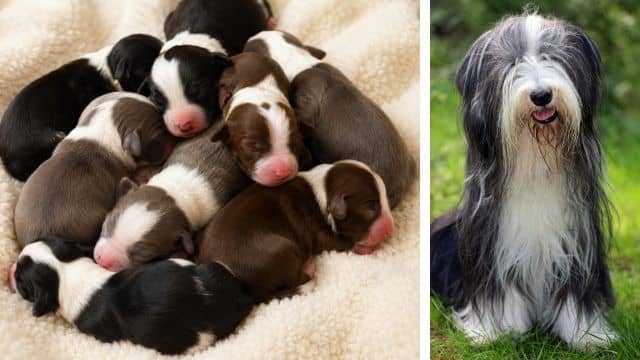
Bearded Collie & Old English Sheepdog
Both of these shaggy breeds are often born black or dark brown. By adulthood, the black fades to slate grey or silver, leaving behind only hints of the dark puppy they once were.
The short version: If you adopt a dark Kerry Blue, Bedlington, Poodle, or Sheepdog puppy, don’t get too attached to that color. It’s just a phase.
The Sprinklers: Born White, Develop Spots
These puppies arrive as pure white marshmallows. Then, like magic, nature adds the sprinkles—speckles, roan patterns, or full Dalmatian spots.
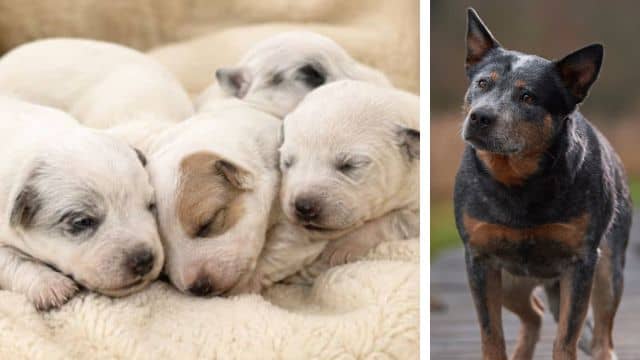
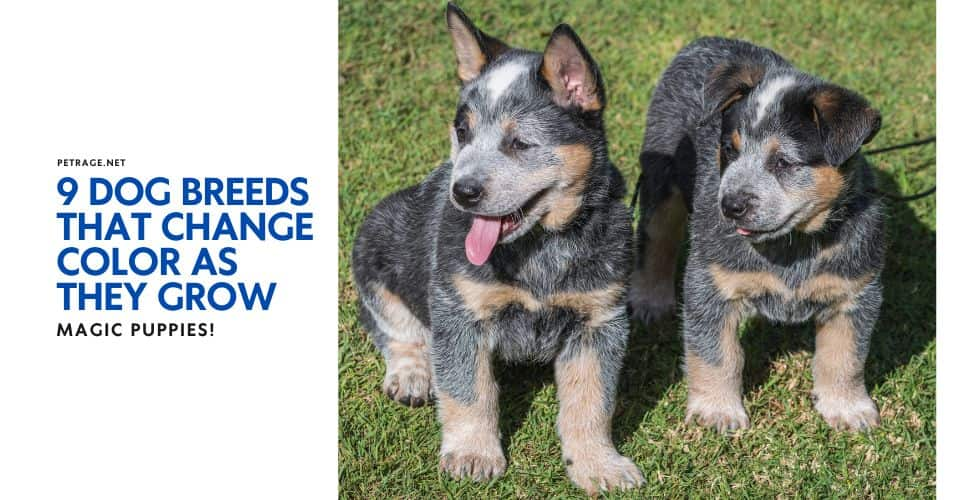
Australian Cattle Dog (ACD)
This is evolution at its smartest. ACD puppies are born completely white. Why? So their mothers wouldn’t step on them in the dark—and so wild cattle wouldn’t kick a dark puppy. Within weeks, the famous blue or red speckled pattern emerges, and by adulthood, they look like entirely different dogs.
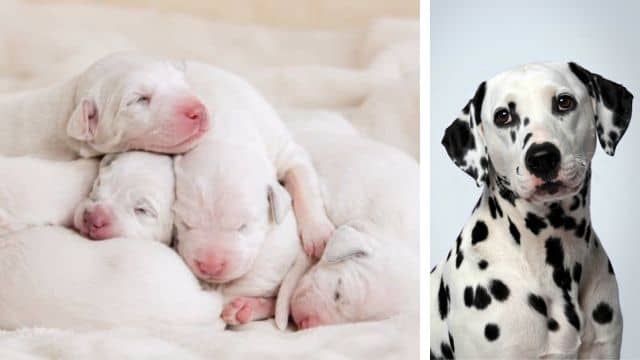
Dalmatian
The most famous color-changer on the list. Dalmatian puppies are born stark white, with zero spots. At around 10 to 14 days, the first freckles appear. Over the next several months, those freckles grow into the iconic black or liver spots we all recognize. A newborn Dalmatian is a blank canvas.
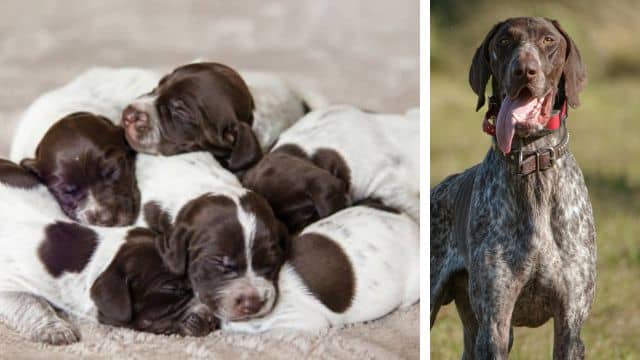
German Shorthaired Pointer (GSP) & English Setter
Both breeds are born mostly white or light cream. As they mature, the signature ticking, flecking, or roan pattern fills in—sometimes taking over a year to fully develop. Many GSP owners joke that they “watched their dog get drawn in.”
The short version: White puppy + time = spotted, speckled, or roan adult. Be patient—the pattern is coming.
The Surprise Box: Born One Thing, Become Something Completely Different
These breeds are the wild cards. Not even breeders can guarantee the final color. You just have to wait and see.

Shih Tzu
The ultimate chameleon. A black-and-white Shih Tzu puppy can turn gold and white by its first birthday. A gold puppy might become orange, silver, or cream. There’s a running joke among Shih Tzu owners: “Don’t name your puppy based on its color. It won’t own it for long.”

Yorkshire Terrier (Yorkie)
Yorkies are born black with tan points. Over two to three years, the black recedes and turns into a steely “blue” (which looks more like dark silver), while the tan brightens into rich gold. The classic Yorkie look is earned—not born.
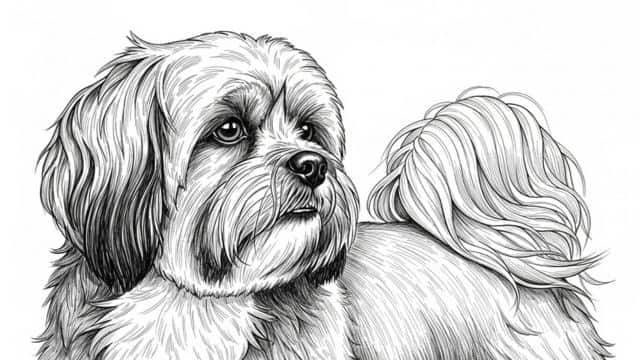
Lhasa Apso
Like their close cousins the Shih Tzus, Lhasa Apsos often arrive dark gold, brown, or black. Within a year, they can lighten to cream, honey, or silver. Owners who fall in love with a dark Lhasa puppy are often shocked by the adult version.
The short version: If you want predictability, get a beige sofa, not a Shih Tzu puppy.
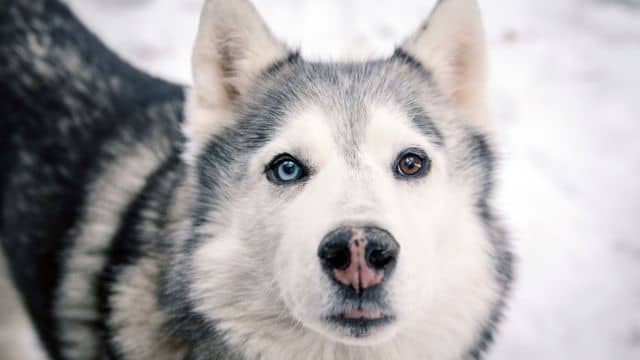
The Eye-Changers: Why Blue Puppy Eyes Don’t Last
Almost every puppy in the world is born with blue eyes. Not because they’re part Husky—but because color takes time.
Here’s what’s actually happening behind those cloudy baby blues:
Week 0 to 2: A newborn puppy’s eyes are sealed shut. Inside, the iris hasn’t started producing any pigment at all.
Week 2 to 4: The eyes open for the first time. What you see is a uniform, cloudy blue or slate-grey. It’s not really “blue” in the adult sense—it’s a blank slate waiting for color.
Week 4 to 8: This is when the magic happens. Pigment cells wake up and start producing melanin. The iris slowly deepens into shades of amber, hazel, brown, or sometimes grey.
Week 12 to 16: The final decision. By four months of age, your puppy’s permanent eye color has settled. What you see now is what you get for life.
The Breeds That Make This Most Dramatic
Weimaraner
Most puppies lose their baby blues by 16 weeks. Weimaraners sometimes hold onto blue or grey eyes into adulthood—but they often shift to amber or light grey. You won’t know which until the very end of the timeline.

But there’s another Weimaraner secret: they’re not always born solid grey. Some Weimaraner puppies enter the world with faint fawn or tan stripes—often called “ghost striping” or “brown-gray tiger stripes.” These markings are most visible in the first few days of life. Then, within one to two weeks, they fade away completely, leaving behind the smooth, ghostly grey coat the breed is famous for.
So a Weimaraner puppy gives you two magic tricks: fading stripes and changing eyes.
Siberian Husky
Huskies follow the same biological clock as every other puppy, but their final color can be wild: both brown, both blue, or one of each (heterochromia). The 12-to-16-week mark is when the surprise is revealed.

A Quick Reality Check
Not every blue-eyed puppy becomes a brown-eyed dog. Some breeds—like Huskies, Australian Shepherds, and Border Collies—can carry a genetic “keep the blue” switch. But for the vast majority of puppies, those baby blues are temporary.
Bottom line: If you adopt a blue-eyed puppy at eight weeks, don’t name them “Blue.” By four months, those eyes might be amber, brown, or something entirely different.
Frequently Asked Questions (For the Curious Puppy Parent)
Do all puppies change eye color?
Not all, but most. The vast majority of puppies are born with blue or grey-blue eyes. By 16 weeks, many will have shifted to amber, hazel, or brown. Some breeds (like Huskies and Border Collies) can keep blue eyes into adulthood due to specific genetics.
At what age do puppies’ eyes change color?
The timeline is remarkably consistent. Eyes open between 2 and 4 weeks, showing cloudy blue. Between 4 and 8 weeks, you’ll see the first hints of their adult color—amber, hazel, or brown. By 12 to 16 weeks, the color is permanent.
How can I tell what color my puppy’s eyes will be?
Look closely between weeks 6 and 8. If you see flecks of gold, brown, or amber spreading from the pupil outward, those baby blues are on their way out. If the eyes remain a clear, uniform blue without any warm tones, there’s a chance they’ll stay blue—especially in breeds known for permanent blue eyes.
Do dogs change color as they get older?
Yes—but usually just once. Most color changes happen from puppyhood to adulthood. However, some dogs (especially those with the “progressive greying” gene) continue fading for 2 to 3 years. And like humans, many senior dogs will develop grey muzzles and faces with age.
What dog breeds change color the most?
The dramatic ones: Dalmatians (born white, develop spots), Australian Cattle Dogs (born white, become speckled), Kerry Blue Terriers (born black, turn grey/blue), Shih Tzus (any color to any other color), and Weimaraners (blue eyes to amber/grey).
Why was my puppy born white but turned dark?
This is less common but happens. Some breeds (like German Shepherds) are born with a pale “puppy coat” that sheds out to reveal a much darker adult coat. Dilute puppies (like “blue” or “lilac” dogs) are often born lighter and actually darken over their first year—the opposite of the fading pattern.
Can you predict a puppy’s final color?
Sometimes. Breeders of Poodles, Kerry Blues, and Bedlingtons can make educated guesses based on pedigree and the color of the puppy’s skin (not fur) at birth. But with breeds like Shih Tzus? Absolutely not. That’s part of the fun.
Do mixed breed puppies change color?
Yes. Any puppy carrying the greying gene (G locus), ticking gene, or a complex color pattern can change dramatically. If your mixed breed puppy has Poodle, Dalmatian, Cattle Dog, Husky, or Shih Tzu in their background, expect surprises.
The “Why” Behind the Magic (For the Curious, Not the Scientists)
If you want a little behind-the-scenes explanation without a genetics textbook, here’s the simple version:
- The Faders carry what breeders call “the eraser gene.” It slowly removes dark pigment over time.
- The Sprinklers have “the sprinkle gene.” Their white puppy coat is just a delay—the spots were always coming.
- The Surprise Boxes have complex color genes that interact unpredictably. Shih Tzus, especially, shuffle their genetic deck and deal a new hand by adulthood.
And for the true nerds? There are real genetic terms for all of this (G locus, T locus, CFA38, sᵉ modification). But honestly? It’s more fun to just call it magic.
The Bottom Line
Pick a puppy for personality—not color.
That adorable black Kerry Blue might be silver in two years. That perfect white Dalmatian spot pattern hasn’t even started yet. And that Shih Tzu you fell in love with? It might look like a completely different dog by its first birthday.
But here’s the thing: all of these changes are part of the joy. Watching a puppy transform—from white to speckled, from black to blue, from blue eyes to amber—is one of nature’s most delightful slow reveals.
So go ahead. Adopt the mystery puppy. You’re not getting a dog. You’re getting a magic trick that unfolds over months.
Quick Reference Card (For Skimmers)
| Born Looking Like… | Turns Into… | Example Breeds |
|---|---|---|
| Black or dark brown | Silver, grey, sandy | Kerry Blue, Bedlington, Poodle |
| Pure white | Spotted, speckled, roan | Dalmatian, Australian Cattle Dog |
| Any color (mystery box) | Something totally different | Shih Tzu, Yorkie, Lhasa Apso |
| Blue eyes (0-8 weeks) | Amber, brown, or one of each | Weimaraner, Siberian Husky |