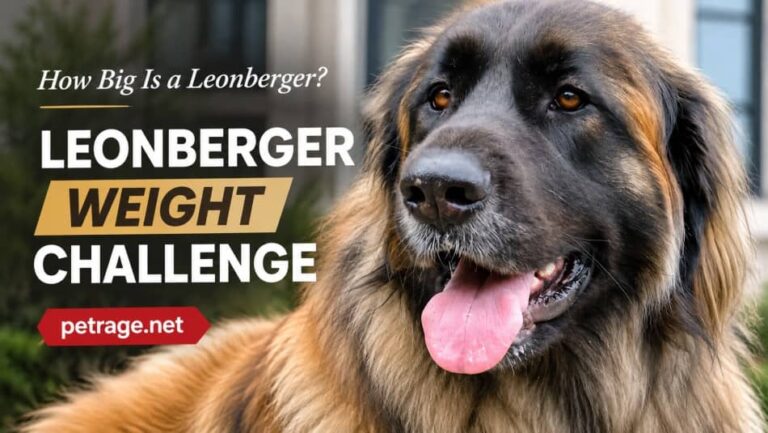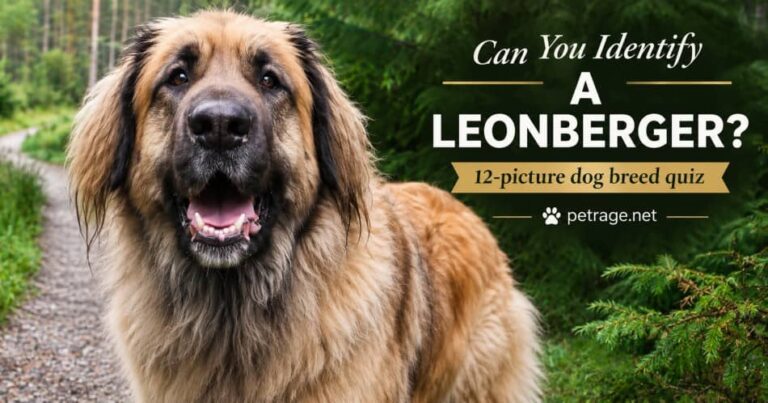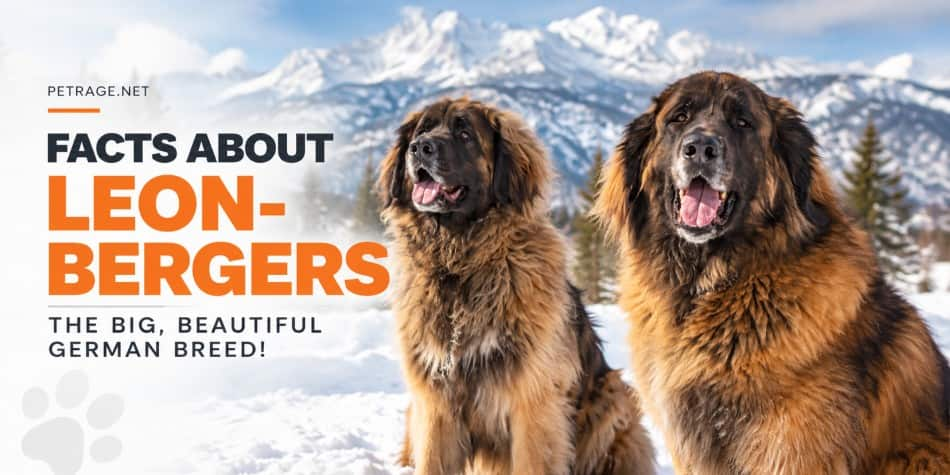
Leonbergers are giant, lion-like dogs from Germany known for their impressive size, thick double coat, calm temperament, and loyal family nature. These Leonberger facts explore the breed’s history, appearance, personality, working background, health considerations, and what makes this gentle giant such a memorable companion.
Should You Get a Leonberger?
The Leonberger is a giant working breed known for its calm temperament, loyalty, and gentle nature with family members. Despite their impressive size, Leonbergers are typically patient and affectionate dogs that often form strong bonds with children and other pets. Originally developed as versatile working companions, they are intelligent and eager to participate in family activities. However, their large size, strength, and grooming needs mean they do best with owners who have the space and commitment required for a giant breed. For the right household, the Leonberger can be a devoted, steady, and loving companion.
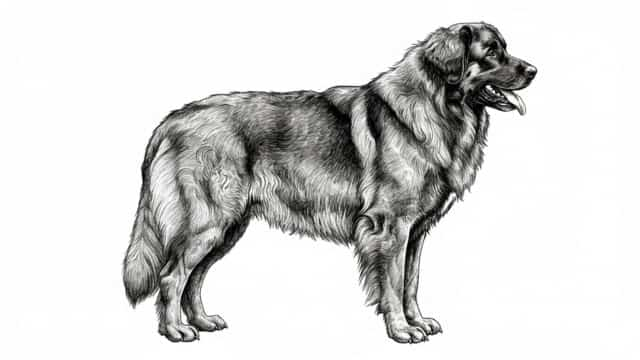
Leonberger — At a Glance
Temperament: Gentle, loyal, patient
Breed Type: Giant working dog
Height: 25–32 inches
Weight: 90–170 pounds
Lifespan: 8–10 years
Shedding: Heavy
Exercise Needs: Moderate
Good for Families: Yes (excellent with children)
Best for Owners: Homes prepared for giant breeds
Origin: Germany
Size: Giant

The Leonberger’s 19th-Century Origins: A True German Designer Dog
The Leonberger is a fairly modern breed, developed in the mid-19th century by Heinrich Essig from Leonberg, Germany. Essig aimed to create a large, majestic dog, and historians believe he crossed Landseer Newfoundlands, Saint Bernards, and Pyrenean Mountain Dogs to achieve the look. However, some experts suggest that due to the Leonberger’s distinctive coat, bone structure, and gentle expression, additional dog breeds may have played a part in the mix—though no definitive records exist to confirm them.
Why Are They Called Leonbergers? The Lion and Bear Connection Explained
Heinrich Essig set out to create a sturdy, large-breed working dog capable of performing rescue work in both mountainous terrain and rivers. The resulting breed took its name from the town of Leonberg, Germany—specifically from the lion (“Löwe” or “leon”) featured on the town’s emblem. The name also nods to the region’s rugged, bear-inhabited forests (or at least the imagery of it), giving the Leonberger a name that evokes both the king of beasts and the strength of the bear.
World War I and the Leonberger: Heroes on the Brink of Extinction
During World War I, the Leonberger proved its versatility and courage by serving as both a military dog and a search-and-rescue dog on the front lines. These brave dogs carried supplies, hauled carts, and reportedly helped locate wounded soldiers in chaotic battlefields. However, the war’s devastation didn’t spare the breed itself. By the time the fighting ended, the Leonberger population had collapsed so dramatically that records suggest only 15 to 20 purebred individuals remained alive. The breed had come terrifyingly close to disappearing forever.
Leonberger Sexually Dimorphic: How Males and Females Look Distinctly Different
The Leonberger is a notably sexually dimorphic breed, meaning you can easily tell males and females apart just by looking at them. Male Leonbergers are not only larger but also carry themselves with a visibly more masculine, powerful appearance—broader in the head, heavier in bone, and more substantial overall. Females, by contrast, are smaller, more refined, and distinctly feminine in expression and body structure. This isn’t a subtle difference; breed standards emphasize it. A male should look unmistakably like a male, and a female unmistakably like a female—making the Leonberger a standout example of sexual dimorphism in the dog world.
According to FCI Breed Standard
According to the FCI Breed Standard, the Leonberger is a true giant among dogs, capable of reaching up to 32 inches (males) in height at the shoulder and weighing as much as 170 pounds. But size isn’t the only distinctive trait.
The standard allows a rich palette of coat colors, including:
Lion yellow
Red
Reddish brown
Sandy (pale yellow to cream-colored)
And all combinations in between
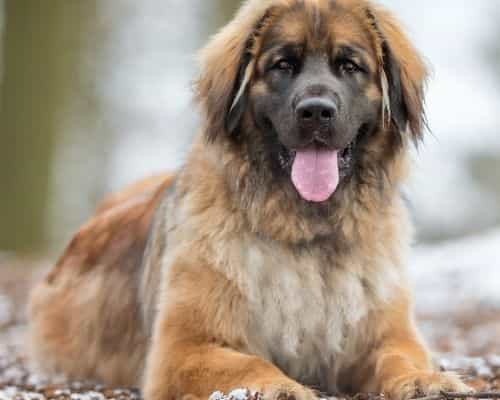
One non-negotiable feature ties these colors together: a black mask on the face. Additionally, black tips on the outer coat hairs are permitted, but the standard is very clear—black must never determine the dog’s basic color. In other words, a Leonberger should always read as golden, red, or sandy first, with just a whisper of black for accent, never the main event.
Leonberger Litter Sizes: From Average (6) to Record-Breaking (18!)
For such a giant breed, Leonbergers actually have relatively modest litters—the average is around six puppies. But averages don’t tell the whole story. A Leonberger named Ariel, from Powell, Wyoming, made breed history when she gave birth to a staggering 18 puppies in a single litter, setting the official Leonberger breed record
To put that in perspective, the world record for any dog breed belongs to Tia, a Neapolitan Mastiff who delivered a jaw-dropping 24 puppies back in 2004. So while Ariel’s 18 puppies is extraordinary for a Leonberger, even that impressive number still leaves her six pups shy of the all-time global champion.
Growing Up Leonberger!
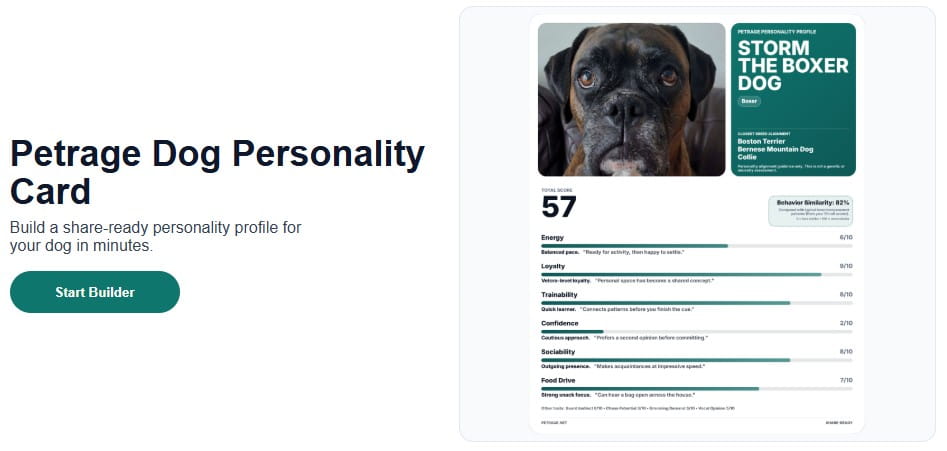
Create Yours Online FREE! You can enter pictures here!
How Fast Can a Leonberger Run?
The AKC Conducts Dog Racing Trials each December in Orlando, FL. called the Fast CAT Invitational. This is a 100 yard race where dogs run individually chasing a lure. The average running speed by Leonberger’s is around 20 mph. The fastest recorded speed by a Leonberger was by a dog named Bluebonnet’s Patent Pending Of Tipping point at 26.06 mph!
Built for Empathy: Why Leonbergers Excel as Therapy Dogs
Thanks to their gentle disposition and an almost uncanny ability to sense human emotion, Leonbergers generally make excellent therapy dogs. These intuitive giants seem to know when something is off with their people. Ask any devoted Leo owner, and they’ll likely tell you the same thing: their dogs become visibly distressed when family members are sad, upset, or even angry. Whether it’s a gentle nudge, a paw on the knee, or simply refusing to leave a person’s side, Leonbergers have a quiet way of saying, “I know something’s wrong—and I’m here for you.”
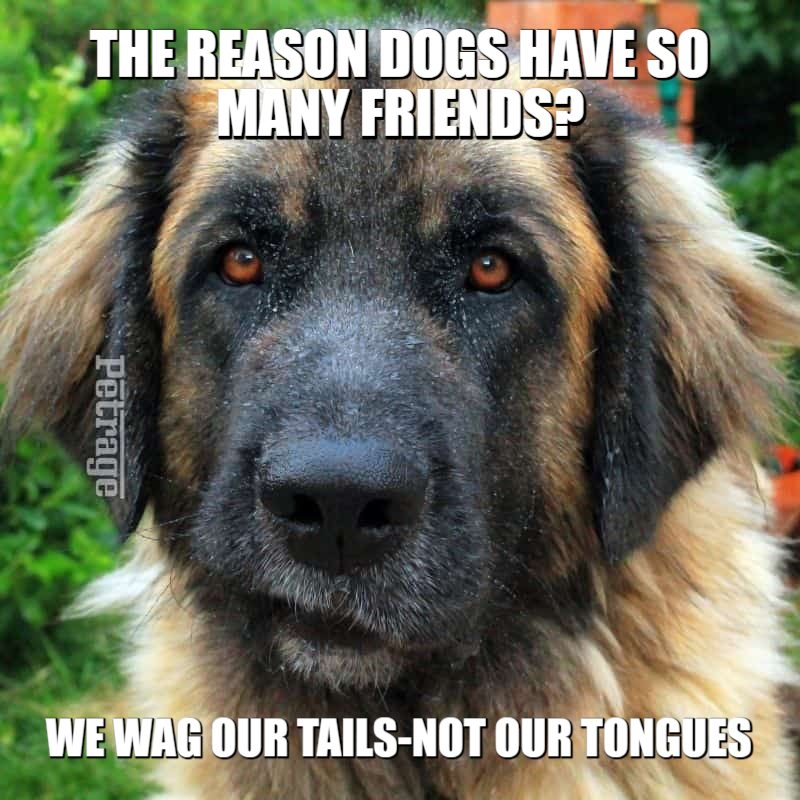
Leo Humor!
Leonberger Shedding: What to Expect and How to Manage It
Let’s be honest—Leonbergers shed. A lot. Not just during certain seasons, but all the time. However, shedding does intensify dramatically during the spring and fall months when they “blow” their undercoat to prepare for the changing weather.
The good news? A consistent grooming routine makes it manageable. Brushing your Leonberger at least every two weeks will help control everyday excess shedding, but be prepared to increase that to several times a week (or even daily) during the peak spring and fall shedding seasons. A monthly bath works well for the rest of the year. Leo owners know the truth: the fluff is part of the love—just make sure you own a good vacuum cleaner.
Built for Work: Leonbergers in Search & Rescue, Water, and Dog Sports
Leonbergers weren’t just bred for their looks—they were bred to work. And they excel at it. Thanks to their strength, intelligence, and webbed feet (a trait inherited from their Newfoundland ancestors), Leonbergers are powerful swimmers and well-suited for water rescue. On the other end of the temperature spectrum, their dense, water-resistant coat also makes them effective avalanche rescue dogs in snowy mountain terrain. Add in their very good scenting abilities, and you have a breed that can locate people on land, in water, or under snow.
Because they are highly trainable and eager to please, Leonbergers also shine in competitive dog sports. You’ll often see them participating in:
Drafting (pulling carts or wagons)
Coursing
Dock diving
Agility
Obedience competitions
Whether saving lives or collecting ribbons, the Leonberger is a working dog through and through.
Leonberger Health and Lifespan
The Leonberger is a large, powerful breed, but like many giant dogs, their lifespan is unfortunately shorter than average—typically 8 to 9 years. While they are generally robust, Leonbergers are prone to certain hereditary and breed-specific health conditions that responsible owners and breeders should be aware of.
These include:
Osteosarcoma – an aggressive bone cancer that disproportionately affects large and giant breeds
Sudden death related to arrhythmia – a heart condition that can cause unexpected cardiac events, often linked to conditions such as dilated cardiomyopathy or inherited rhythm disorders
Polyneuropathy – a neurological disorder affecting the peripheral nerves, which can lead to weakness, muscle wasting, and coordination problems
Regular veterinary checkups, cardiac screenings, and genetic testing where available can help detect early signs and improve quality of life. Responsible breeders also screen for these conditions to reduce their prevalence in future generations.
One Dog, Three Breeds: The Curious Case of Caesar the Leonberger
In the late 19th century, Leonbergers were so controversial among official dog show judges that some breeders resorted to entering their dogs under different breed names to compete. One famous Leonberger named Caesar was shown as three different breeds depending on the venue: in Germany, he was presented as a “long-haired Alpine dog”; in England, judges saw him as a magnificent Saint Bernard. Meanwhile, a Saint Bernard expert named Dr. Kunzli declared Caesar a beautiful Leonberger. This identity crisis stemmed from Heinrich Essig’s murky breeding records and his aggressive marketing tactics, which made official cynologists suspicious of the breed. They even attempted to ban Leonberger breeders from shows, accusing them of producing dogs “only for the bottom line” .
So, What do You Get With a Leo?
They shed a lot. They love to swim and will think nothing of rolling in a mud puddle. They generally do not drool much but a drink of water can turn into a puddle across the floor. They like to dig. They are relatively intelligent but can be stubborn (specially during adolescence)…
AND
they are devoted to their families. They have a huge heart and will become your best friend. They will sense your bad, sad and happy moods and act accordingly. They are usually very even-tempered even in the middle of chaos and will protect their families if necessary. They are great with kids and, usually other animals. Leonberger’s are gentle giants with a huge heart!
Frequently Asked Questions About Leonbergers
Are Leonbergers good with children and other pets?
Yes. Leonbergers are famously gentle and patient, making them excellent family dogs. They typically do very well with children of all ages, though their large size means supervision is always wise around toddlers to prevent accidental knocking over. With proper socialization, Leonbergers also get along well with other dogs and even cats. Their natural herding and guarding instincts are mild compared to other large breeds, so aggression toward household pets is uncommon.
How much exercise does a Leonberger need daily?
Despite their giant size, Leonbergers are not hyperactive. They need moderate daily exercise — typically 45 to 60 minutes of walking, light jogging, or supervised off-leash play in a secure area. They enjoy swimming, hiking, and pulling carts (drafting), but they are also content to lounge indoors. Avoid intense exercise in hot weather, as their thick coat makes them prone to overheating. Puppies should have limited forced exercise to protect developing joints.
Do Leonbergers drool a lot?
Moderately. Leonbergers have loose flews (the hanging upper lips) similar to Saint Bernards and Newfoundlands, so they do drool — especially after drinking water, eating, or exercising in warm weather. However, they are generally not as prolific droolers as Bloodhounds or Mastiffs. Keeping a “drool rag” handy near the water bowl is common advice among Leo owners.
Can Leonbergers live in apartments or hot climates?
Leonbergers are not well-suited for apartments or hot climates. They need space to move comfortably indoors and access to a securely fenced yard. Their dense double coat was developed for cold European winters, so they struggle in high heat and humidity. If you live in a warm region, you will need air conditioning, limited outdoor exercise during peak heat, and access to swimming or cooling mats. They are happiest in temperate to cool climates.
Are Leonbergers easy to train?
Yes, they are highly trainable but require patience and positive reinforcement. Leonbergers are intelligent, eager to please, and sensitive — they do not respond well to harsh corrections or yelling. Early puppy socialization and basic obedience classes are strongly recommended. Their size alone makes leash manners and basic commands essential. Many excel in advanced obedience, drafting, and water work when trained with consistency and kindness.
Do Leonbergers bark a lot?
No, they are generally quiet dogs. Leonbergers are not known as excessive barkers. They may alert bark to announce visitors or unusual sounds, but they do not typically bark out of boredom or anxiety. Some owners describe their vocalizations as more of a “chuff” or low rumble rather than a sharp bark. This quiet nature is one reason they can adapt to suburban life despite their size.
How long do Leonbergers take to reach full size?
Leonbergers grow slowly compared to smaller breeds. They typically reach their full height between 18 and 24 months of age, but they continue filling out in chest width, bone density, and muscle mass until 2.5 to 3 years old. This slow maturation is why large-breed puppy food is recommended for the first 18–24 months to support controlled, healthy bone growth. Rushing growth with excess calories or supplements can worsen joint problems.
Do Leonbergers have webbed feet?
Yes. Like their Newfoundland ancestors, Leonbergers have webbed feet. This adaptation makes them powerful, efficient swimmers. The webbing between their toes helps them paddle through water with greater propulsion, which is why they excel at water rescue and dock diving competitions. It also helps them move through soft mud or snow without sinking.
Are Leonbergers recognized by all major kennel clubs?
Yes. The Leonberger is fully recognized by the American Kennel Club (AKC), which placed the breed in the Working Group in 2010. They are also recognized by the Fédération Cynologique Internationale (FCI), the United Kennel Club (UKC), the Canadian Kennel Club (CKC), and the Kennel Club (UK). Breed standards vary slightly between organizations, but all emphasize the breed’s size, black mask, and strong sexual dimorphism.
What is the difference between a Leonberger and a Landseer Newfoundland?
This is a common point of confusion. The Landseer Newfoundland is a distinct variety of Newfoundland (black-and-white coat) recognized as a separate breed in some European registries. The Leonberger was partially developed from Landseer Newfoundlands, but the two breeds diverged significantly. Leonbergers are generally taller, have a lion-like coat (red to sandy yellow with a black mask), and a more energetic and athletic temperament than the heavier, more sedentary Landseer. The easiest difference to spot is color: Leonbergers are never black-and-white like Landseers.
Facts About Leonbergers-Final Thoughts
Leonbergers are gentle giants with a rare mix of size, beauty, intelligence, and steady family loyalty. Their lion-like coat and impressive build make them one of the most striking giant dog breeds, but their calm, affectionate temperament is what truly makes them special.
They can be wonderful companions for families who have the space, time, and patience to meet their needs. Leonbergers require regular exercise, early socialization, consistent training, and plenty of grooming, especially during shedding season. Their size also means they should always be supervised around very young children, even though they are usually gentle and patient.
For the right home, a Leonberger is more than a big, beautiful dog. This breed can be a loyal family companion, a confident working dog, a strong swimmer, and a loving presence with a truly enormous heart.
Check Out The Leonberger Pictures
Shared by our users. Say “hello” and share a picture or two to the Leo gallery!